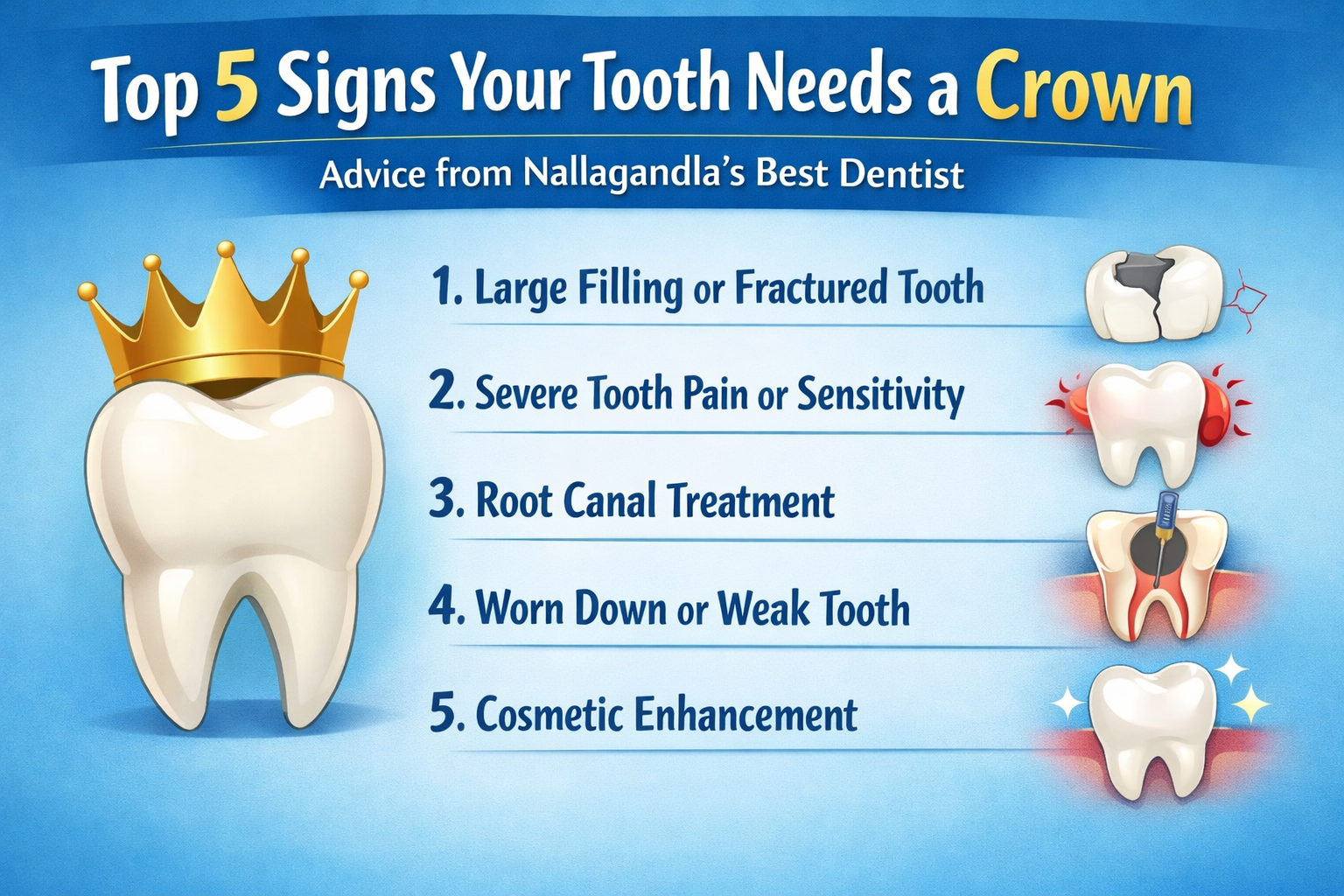
Have you been ignoring that nagging tooth pain, hoping it’ll just go away on its own? You’re not alone. Most people put off dental visits until the discomfort becomes unbearable, and by then, a simple fix may have turned into something more serious. One of the most common treatments that saves damaged teeth every day is a dental crown. But how do you know if you actually need one?
At Finedent Dental Clinic, the trusted dental clinic in Nallagandla, our specialists see patients every day who waited just a little too long. So we put together this simple guide to help you catch the warning signs early—before a small problem becomes a big one.
What Exactly Is a Dental Crown?
A dental crown is a tooth-shaped cap placed over a damaged or weakened tooth to restore its shape, strength, and appearance. Think of it as a protective helmet for your tooth. Crowns can be made from porcelain, ceramic, metal, or a combination — and when done right, they look and feel completely natural.
Now, let’s get to the signs you shouldn’t ignore.
Sign 1 — You Have a Cracked or Fractured Tooth
Cracked teeth are more common than most people realise. They can happen from biting down on something hard, teeth grinding at night, or even an old filling that weakened the tooth over time.
If you feel a sharp, sudden pain when chewing — especially when you release the bite — that’s a classic sign of a cracked tooth. A crack that’s left untreated can deepen and spread, eventually reaching the root and making extraction unavoidable.
A crown holds the cracked tooth together, preventing the crack from worsening and relieving that uncomfortable biting pain. Don’t wait until it splits completely—visit a dentist in Nallagandla as soon as you notice that tell-tale sharp sensation.
Sign 2 — Your Tooth Has a Large Cavity That Can’t Be Filled
Not every cavity can be fixed with a simple filling. When decay has eaten away a large portion of your tooth, there simply isn’t enough healthy structure left to hold a filling in place securely.
In these cases, placing a filling may actually do more harm than good — it can crack the remaining tooth. A crown covers the entire tooth, distributing the biting force evenly and protecting what’s left of the natural structure.
If your dentist mentions that a cavity is “too large for a filling,” a crown is likely the next best step — and the right one.
Sign 3 — You’ve Just Had a Root Canal
Root canal treatment saves an infected tooth by removing the damaged pulp inside. But here’s something many patients don’t realise: after a root canal, the tooth becomes brittle and vulnerable to fracture.
A root canal-treated tooth without a crown is like a building without a roof—technically standing, but exposed to damage. Placing a crown after root canal treatment is almost always recommended by dental specialists, and at Finedent—one of the best dental clinics in Nallagandla—we ensure every root canal is properly followed up with the right crown placement to protect your investment.
Sign 4 — Your Tooth Is Severely Worn Down
Do you grind your teeth at night (a condition called bruxism)? Or have years of acidic food and drinks eroded your enamel? Over time, teeth can become so worn down that they lose their proper shape and biting surface.
Worn teeth are not just a cosmetic concern. They affect your bite, cause jaw pain, and make chewing difficult. A crown restores the tooth to its original height and shape, bringing your bite back into balance and protecting the remaining enamel from further erosion.
Sign 5 — You Have a Broken or Severely Damaged Tooth
Accidents happen — a sports injury, a fall, or even biting into an unexpectedly hard piece of food can chip or break a tooth. If a significant portion of your tooth is broken off, a filling won’t be strong enough to rebuild it.
A crown can restore the full structure of a badly broken tooth, saving it from extraction entirely. The sooner you act after a tooth breaks, the better the outcome. If you’re in the area, the team at Finedent Dental Clinic, Nallagandla, can assess the damage and recommend the best course of action quickly.
Why Early Action Always Wins
Here’s the truth: dental problems never fix themselves. A small crack ignored today becomes a split tooth tomorrow. A large cavity left untreated can lead to infection, root canal treatment, and eventually tooth loss. Crowns, when placed at the right time, are a long-lasting and cost-effective way to preserve your natural teeth for years — even decades.
If you’ve noticed any of the signs above, don’t put it off. A quick consultation can save you a lot of pain, time, and expense down the road.
Trust Finedent — The Best Dentist in Nallagandla
At Finedent Dental Clinic, we combine advanced in-house technology — including iTero digital scanning, OPG, and CBCT — with a team of highly experienced dental specialists to give you the most accurate diagnosis and the most comfortable treatment experience possible.
We’re not just a dental clinic in Nallagandla—we’re your long-term dental health partners. With over 445 crowns placed and thousands of happy smiles across our four Hyderabad branches, you’re in trusted hands.
📞 Call us at +91 76600 00226 🌐 Book your appointment at finedent.in
Your smile deserves the best care. Don’t wait for the pain to make the decision for you.
Frequently Asked Questions (FAQs)
Q1. How long does a dental crown last?
Ans: With proper care and regular dental check-ups, a good-quality crown can last anywhere from 10 to 15 years or longer. Avoiding hard foods and maintaining oral hygiene plays a big role in its longevity.
Q2. Is getting a dental crown painful?
Ans: No. The procedure is done under local anesthesia, so you won’t feel pain during the treatment. Some mild sensitivity or discomfort after the procedure is normal and usually settles within a few days.
Q3. Can I delay getting a crown if my tooth doesn’t hurt much?
Ans: It’s not advisable. Pain is not always an accurate indicator of how serious the damage is. A cracked or weakened tooth may feel fine until it suddenly fractures or becomes infected. Early crown placement prevents more complex—and expensive—treatment later.